Transition to digitalization and seize the opportunities of the digital economy
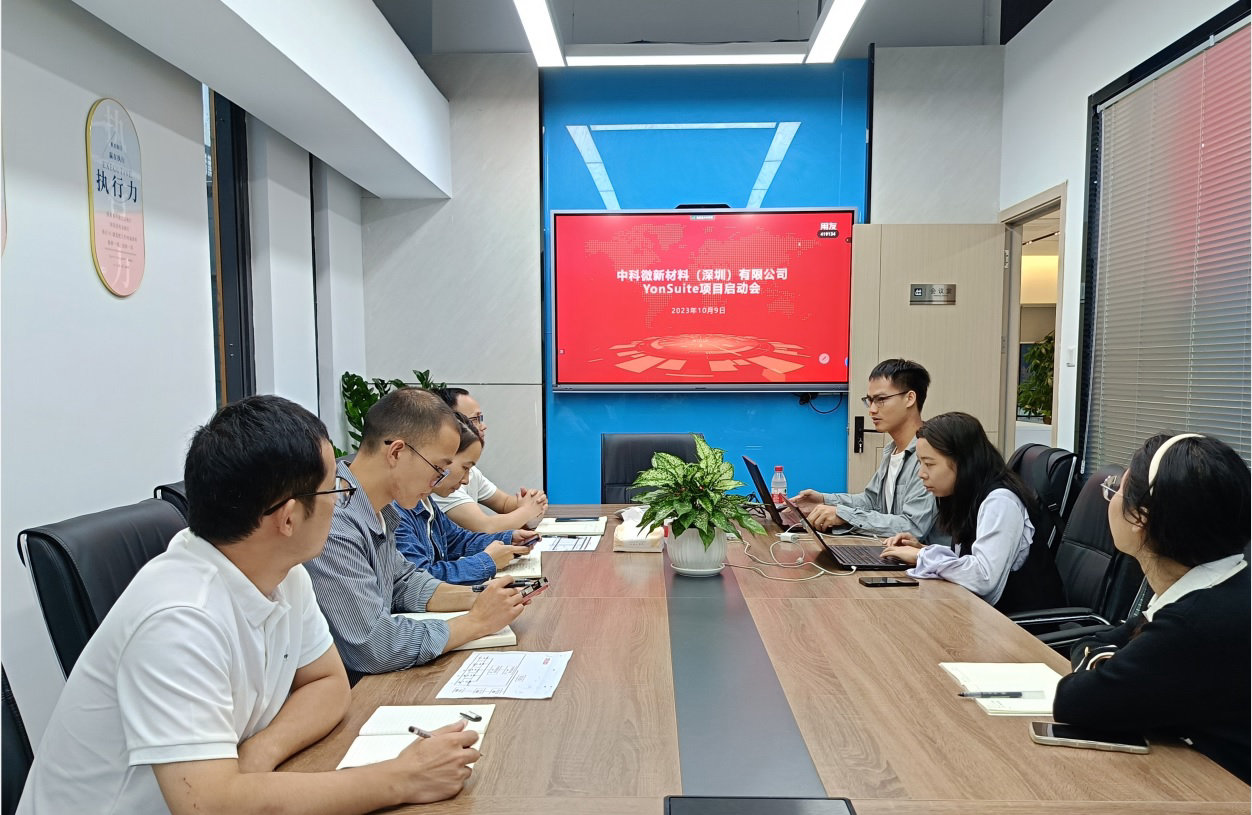
With the continuous advancement of information technology, the digital application and management of enterprise data has become ubiquitous. Enterprise Resource Planning (ERP) systems are increasingly serving as a vital tool for businesses of all types to enhance efficiency and optimize processes. Upholding an innovative, open, rigorous, and down-to-earth corporate ethos, Zhongke Micro New Materials (Shenzhen) Co., Ltd. has launched the YonSuite kickoff meeting at 10:00 AM on October 9th to improve the efficiency of both initial framework establishment and subsequent high-efficiency procedural management.
The meeting covered discussions on the significant importance of ERP systems for enhancing enterprise management and employee productivity, the principles and architecture of enterprise resource planning systems, the functions and applications of various modules, data management and analysis, as well as customized system solutions for Zhongke Micro's departments, end-to-end processes, and fully integrated workflows. During the meeting, Zhongke Micro's senior management and project leads engaged in productive exchanges with the YonSuite technical team. Attendees listened attentively, actively participated in discussions, and offered suggestions based on their departmental insights and requirements. This demonstrated Zhongke Micro's strong corporate culture characterized by high commitment to development, rigorous standards, and exceptional efficiency.
The formal launch of the ERP system marks a significant innovation for Zhongke Micro New Materials in integrated management coordination and streamlining interdepartmental communication channels. It also represents a crucial step in Zhongke Micro's transformation into a digital enterprise.
Digital transformation delivers numerous positive impacts for businesses:
1. Enhanced Operational Efficiency
Digital transformation enables businesses to automate and standardize their processes, significantly reducing labor costs and boosting efficiency. Through the integration of digital tools and applications, companies can achieve substantial improvements in process optimization, automation, standardization, and delivery speed.
2. Improved Customer Experience
Digital transformation helps businesses optimize services, sales, and marketing to boost customer satisfaction. Through data analytics and AI-powered tools, companies gain deeper insights into customer needs, delivering more accurate, personalized, and timely services that enhance customer experience and loyalty.
3. Creating New Business Opportunities
Digital transformation enables businesses to explore novel business models and opportunities, expanding their operational scope. For instance, businesses can develop new ventures through digital tools like online marketing, big data analytics, and AI, while achieving faster delivery of goods and services.
4. Strengthen Enterprise Security
Digital transformation enhances the security of corporate information systems and data processing, reducing risks such as information leaks and identity theft. Businesses can implement multi-layered security measures—including transmission encryption, backups, and data protection—through digital tools to bolster IT security.
5. Fostering Innovation
Digital transformation enables technological innovation through new technologies and digital tools, delivering higher-quality products and services. Advancing digital transformation also drives organizational and cultural change, stimulating employees' proactive innovation mindset and capabilities.
6. Enhancing Adaptability to Change
Digital transformation strengthens internal communication and collaboration, establishing a more agile and change-resilient corporate structure and culture. This helps enterprises maintain flexibility and adaptability in an ever-changing market environment.
In summary, digital transformation is an unavoidable trend for enterprises in the digital age. As digital technologies continue to evolve, businesses must proactively advance digital transformation to enhance operational efficiency, improve customer experience, create new opportunities, strengthen security, foster innovation, and increase resilience to change. This will become one of the core competencies essential for enterprises seeking to maintain a competitive edge.

WeChat official account